Posts
Pick the series that matches where you are and start with part one. Every guide walks you through real grids, one deduction at a time.
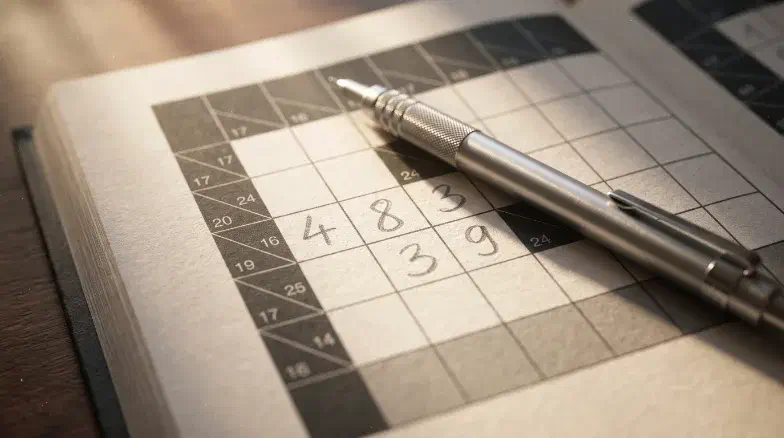
Kakuro for Beginners
Never filled a cross-sum grid? Learn the rules, the sums that only fit one way, and how to crack your first corner.

Solving Logic Grid Mysteries
Turn a page of clues into a name, a room, and a weapon. Learn the grid, then work the cases.

Advanced Kakuro Tactics
Tempted to guess? Magic blocks, the 45 rule, and intersection bounds get you moving again without it.
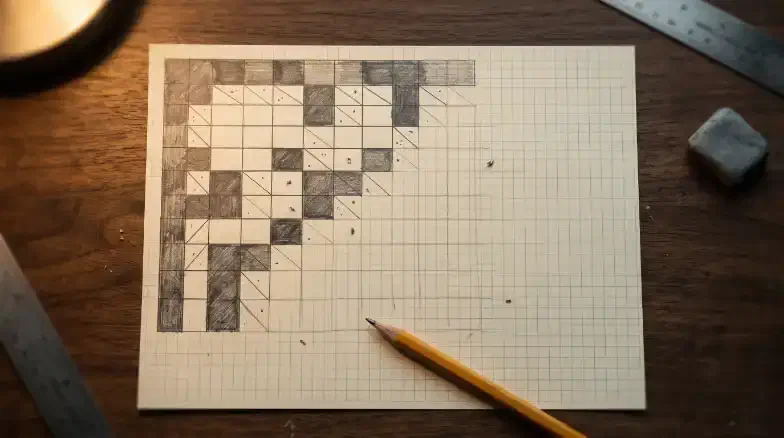
Kakuro Puzzle Design
Draw a symmetric grid, make sure it has exactly one answer, and check it with a Python solver.
All Articles (23)

From the Zebra Puzzle to Murder Mystery Grids: How Deductive Cases Work
Explore how Einstein's 1962 Zebra Puzzle evolved into modern murder mystery logic grids like Murdle. Compare table vs. staircase grids and play 4 free cases.
Transitive Cross-Referencing: Syncing Sub-Grids to Break Mid-Game Stalls
Stuck halfway through a logic grid puzzle after reading every clue? Learn how to copy marks between sub-grids using positive and negative transitive logic.
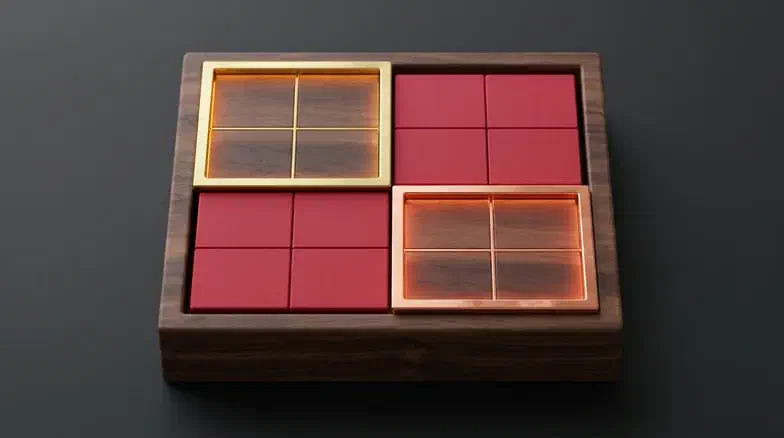
Mastering "Either/Or" and "One of These Two" Clues in Logic Grids
Crack 'either/or' and 'of A and B, one was X and the other was Y' clues in logic grid puzzles. Learn locked 2x2 boxes, cross-block X!=Y, and shared-name pairs.

Cracking Ordered Clues: How to Solve "Earlier Than" and Exact-Gap Ladders
Master time, floor, and sequence clues in logic grid puzzles. Learn endpoint elimination for 'earlier than' clues and sliding windows for exact-gap ladders.
How Logic Grid Matrices Work: Sub-Grids, Rows, and Auto-Elimination
Confused by the L-shaped staircase chart in logic puzzles? Learn how sub-grids connect categories, why one dot clears a row and column, and how to find singles.
How to Solve Logic Grid Puzzles: From Basic Elimination to Murder Mystery Deduction
Learn how to solve logic grid puzzles without guessing. Master staircase matrices, all six clue types, ladder bounds, and cross-grid syncing for murder mysteries.

Designing Kakuro Grids That Hide an Answer
Design escape room Kakuro puzzles that reveal a secret lock code or page number: pre-lock target cells, avoid the zero and duplicate traps, and pace the reveal.

Build a Kakuro Solver and Generator in Python
Write a fast Python Kakuro solver using 9-bit candidate masks and run-level filtering, then build a generator that repairs 2x2 swaps and grades human difficulty.

How to Set Kakuro Difficulty: Technique, Not Grid Size
Kakuro difficulty comes from the hardest deduction technique a grid forces, not its size. Grade a 7x7 as Medium, then refill the same layout so it requires a region count.
How to Make Sure Your Kakuro Has Exactly One Solution (Fixing 2x2 Swaps)
Why fill-first Kakuro grids suffer from 2x2 deadly digit swaps, why magic blocks can't stop a pure swap, and how to prove and repair solution uniqueness.

Designing a Kakuro Grid: 180° Symmetry, Run Lengths, and Black Cells
Learn Kakuro grid topology rules: 2-to-9 cell run bounds, orthogonal connectivity, 180-degree interior symmetry (N-r, N-c), and printable 7x7–15x15 PDF templates.
How to Make a Kakuro Puzzle From Scratch
Complete hub guide to constructing a valid Kakuro puzzle from scratch: 180-degree grid symmetry, fixing 2x2 deadly swaps, difficulty grading, and Python verification.

Eliminating Guesswork in Kakuro: Parity and Logic
Stop guessing on expert Kakuro puzzles. Use odd/even parity rules, ghost duplicates, and short forcing chains to resolve 2x2 pockets with pure deduction.

Kakuro Intersection Logic: Ceilings, Floors, and High-Low Crossings
Master advanced Kakuro intersection logic: calculate ceiling and floor bounds for long entries, eliminate 'too big' and 'too small' candidates, and force corners.
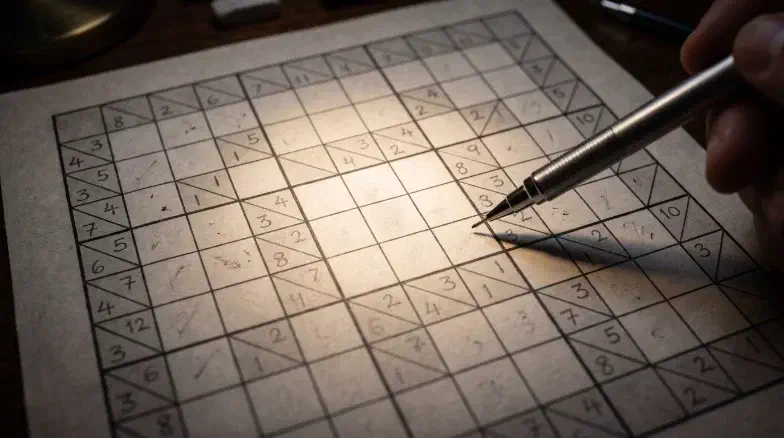
Mastering the 45 Rule in Kakuro
Kakuro has no 3x3 boxes, so the Sudoku 45 rule needs a twist. Learn the 45-minus-clue long-entry trick and how innies and outies crack open isolated blocks.
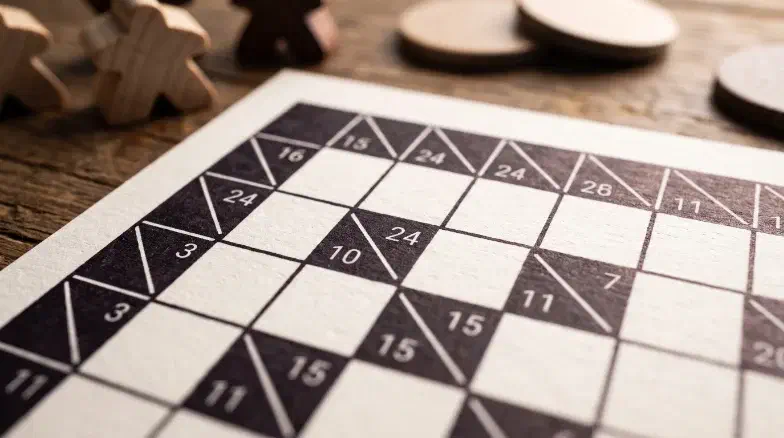
Kakuro Magic Blocks Cheat Sheet: All 16 Unique Sums (2 to 5 Cells)
Complete reference table of all 16 Kakuro magic blocks across 2, 3, 4, and 5 cells. Learn how 4-cell and 5-cell unique sums cap crossing runs on hard grids.
The Ultimate Guide to Advanced Kakuro Tactics
Advanced Kakuro tactics in one place: 2-to-5 cell magic blocks, ceiling/floor intersections, the 45 rule (innies/outies), and parity forcing chains.
Transitioning from Sudoku to Kakuro: What Changes?
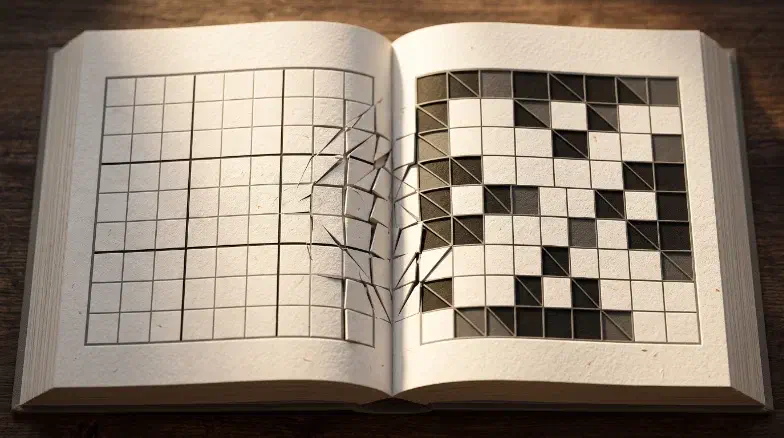
Good at Sudoku but stuck on Kakuro? See which habits carry over, why the no-repeat rule resets at every black cell, and how Sudoku pairs map to unique sums.

Common Kakuro Mistakes Beginners Make and How to Avoid Them
Guessing, hidden duplicates, stale pencil marks, and addition slips ruin most beginner Kakuro grids. Here's how to catch each habit and stop it early.

How to Cross-Reference Kakuro Clues: Solving Your First 2x2 Corners
Learn beginner Kakuro cross-referencing: intersect 2-cell across and down clues to lock corner digits, calculate forced remainders, and solve without guessing.

Kakuro Unique Sums for Beginners: 3, 4, 16, and 17 in Two Cells
Master the four 2-cell Kakuro unique sums (3, 4, 16, and 17) that start every beginner solve, learn the 10-minus-X mirror formula, and crack a 6x6 practice grid.

Understanding Kakuro Rules and Grid Mechanics
Learn the Kakuro rules that trip up new solvers: which way diagonal clues point, where an entry starts and stops, and why one row can legally hold two 5s.
The Complete Beginner's Guide to Solving Kakuro
New to Kakuro? Learn to read diagonal sum clues, spot the 16 unique magic blocks that start every solve, and cross-reference intersections with zero guesswork.